
01
Refrigerant Charge Check
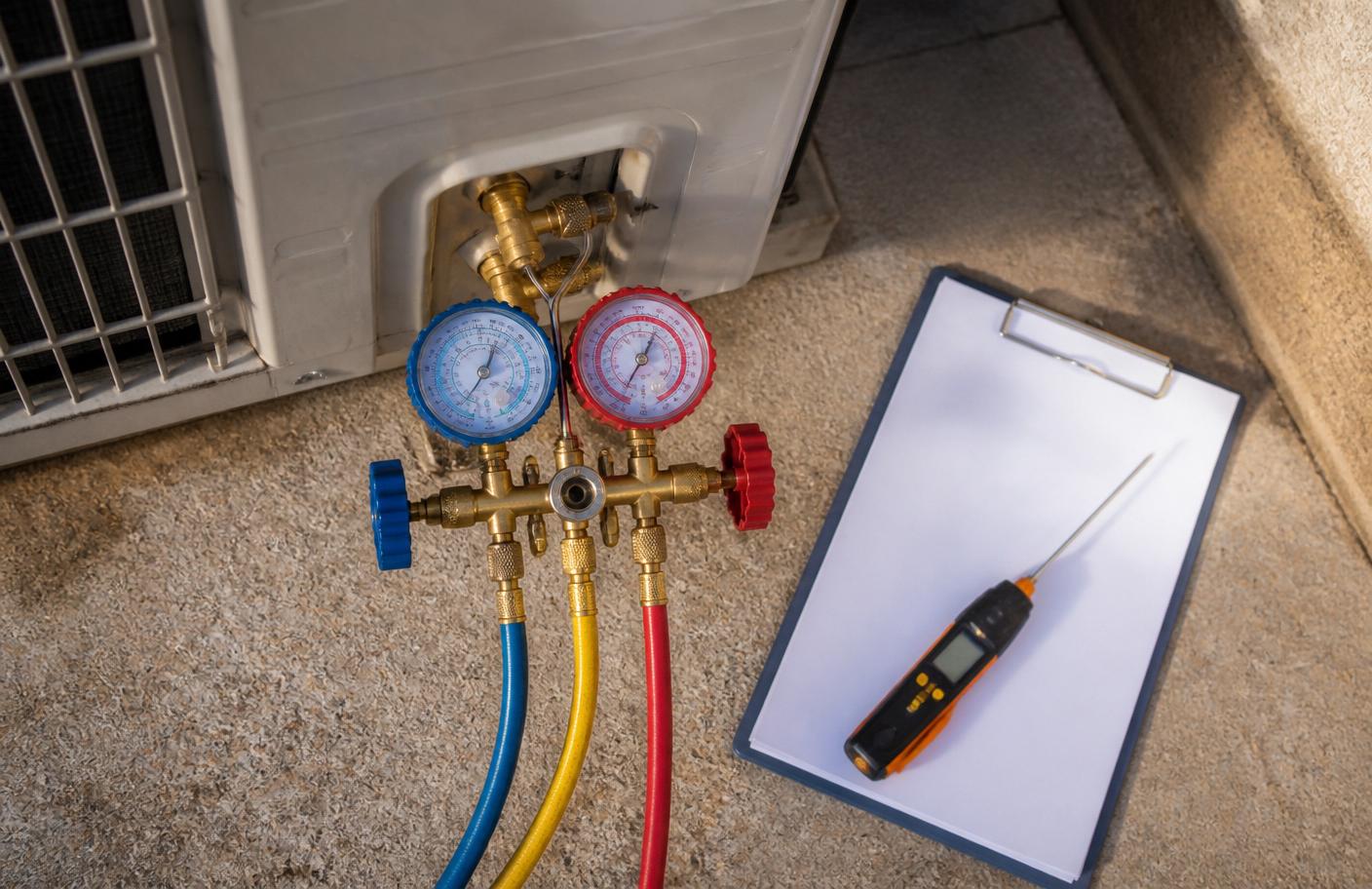
Superheat and subcool measured — not just 'pressures look okay.' A system 10% undercharged costs you 20% in efficiency.
The Valley kills unmaintained HVAC systems. Annual tune-ups keep yours running through July.
A residential AC in Phoenix runs 3–4x the hours of one in a moderate climate. Refrigerant charge drifts, capacitors weaken, blower wheels load up with dust, condenser coils fill with cottonwood and dryer lint. Skipping annual maintenance in the Valley isn't 'saving money' — it's guaranteeing a $600 emergency call in the middle of July.
We recommend two tune-ups a year: spring (cooling) and fall (heating). Both are multi-point inspections that catch small failures before they become emergency calls.
Every tune-up is documented — refrigerant pressures, capacitor readings, static pressure, temperature split, amperage draw. You get the numbers, not just 'looks good.'
Our maintenance plan customers get priority scheduling in peak season and a discount on any repairs identified during service.
Written scope, fixed pricing, and a real technician on every visit — not a subcontractor you've never met.
Superheat and subcool measured — not just 'pressures look okay.' A system 10% undercharged costs you 20% in efficiency.
Weak capacitors are the #1 cause of Valley summer no-cool calls. We measure, we don't guess.
Condenser coils rinsed clear of dust, cottonwood and pet hair. Restricted coils crush efficiency and shorten compressor life.
Blower wheel condition, motor amperage, bearing check, belt condition where applicable.
Contactor condition, wire tightness, disconnect condition — burned contacts kill compressors.
Condensate line flushed, overflow switch tested. A clogged drain floods your attic in July.
Verify accurate temperature reading, verify staging, verify system controls.
Gas furnaces get CO testing, combustion analysis and heat exchanger inspection every fall.
One appointment in spring, one in fall — booked in advance.
Full documented inspection of every mechanical, electrical and refrigerant component.
You get the numbers — pressures, readings, wear condition — not a vague thumbs-up.
Anything needing attention is flagged as immediate, this-year or watch-item.
Systems that are inspected twice a year fail dramatically less often — and almost never on the hottest week of the year.
Well-maintained residential systems last 15+ years. Neglected Valley systems often quit at 8–10.
A properly charged, clean-coil system can run 15–25% more efficiently than a neglected one.
Most manufacturer warranties require documented annual maintenance. We keep the paperwork so your claim stays valid.
Maintenance plan customers get moved to the front of the line during peak-season no-cool calls.
Twice a year in the Valley — spring for cooling, fall for heating. Systems here run far more hours than in most of the country, so annual-only maintenance is genuinely undermaintenance.
Full multi-point inspection: refrigerant pressures, capacitor readings, coil condition, blower and fan check, electrical inspection, drainage check, thermostat verification. Fall visits add CO testing and combustion analysis on gas furnaces.
Yes — an annual plan covers both spring and fall visits, includes priority scheduling, and applies a discount on any repairs found during service.
About 60–90 minutes per system for a thorough visit. We're not the 15-minute-check-a-box outfit.
We'll show you what we find with actual measurements. Immediate safety issues are called out as such. Watch-items are labeled as watch-items. You decide.
This service is available in every community we cover — click your area for local details, response times and ZIP-level coverage.