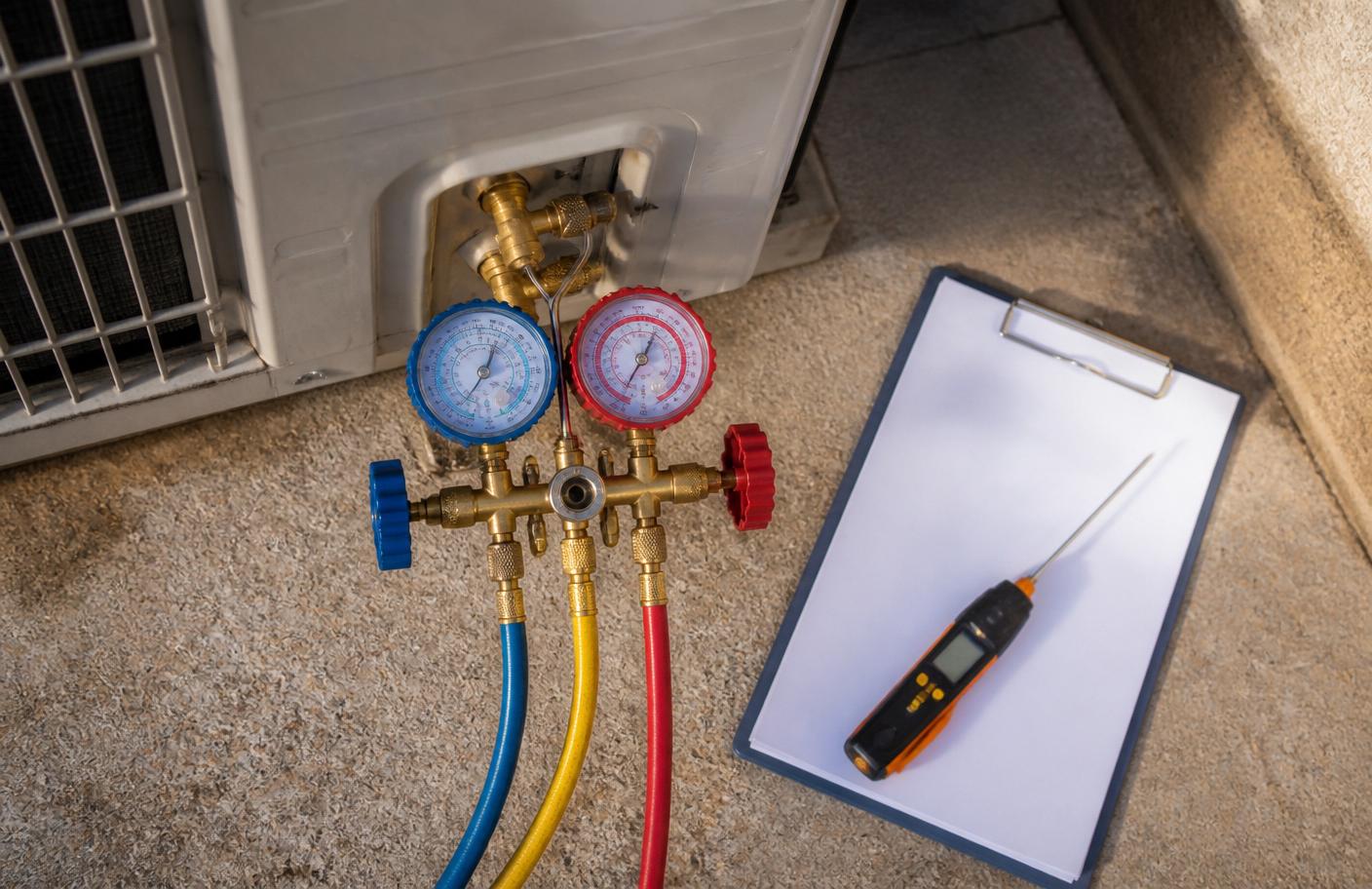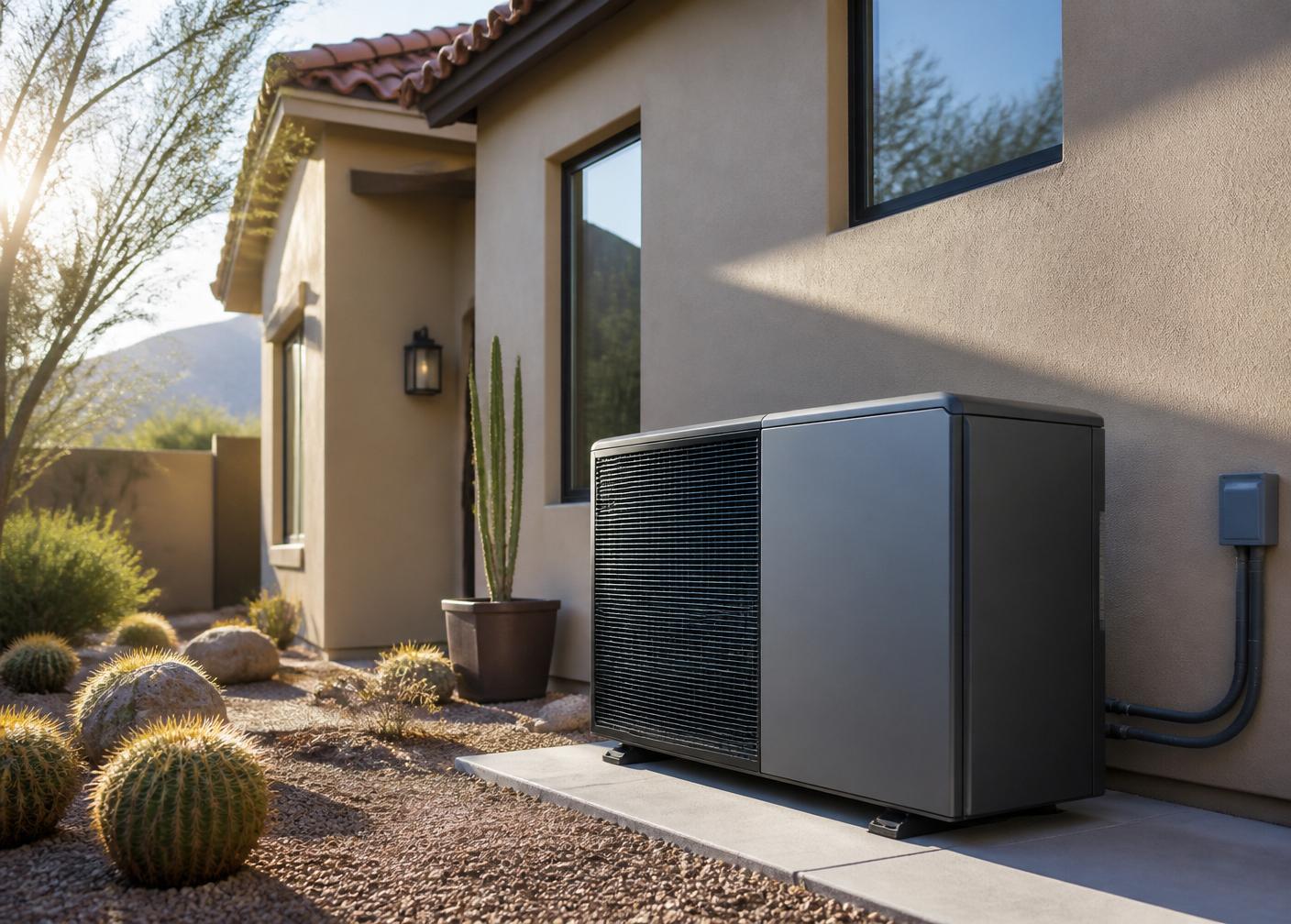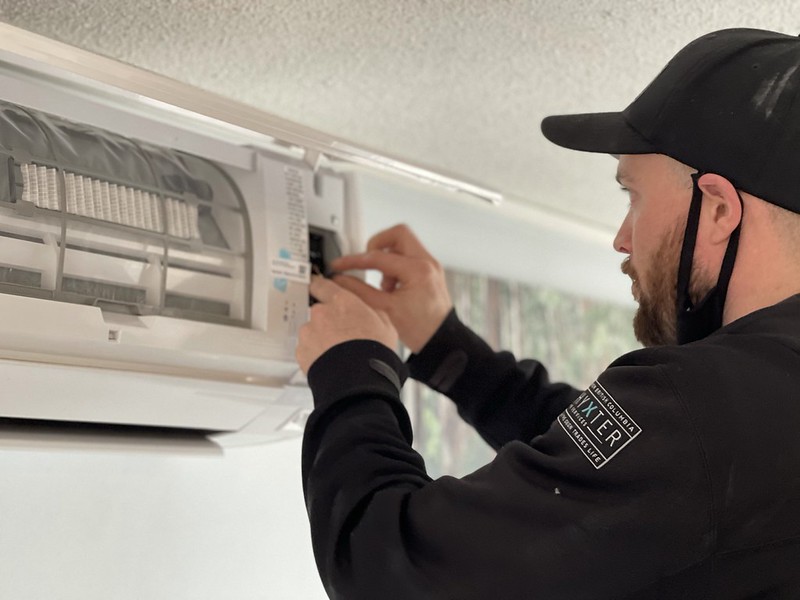
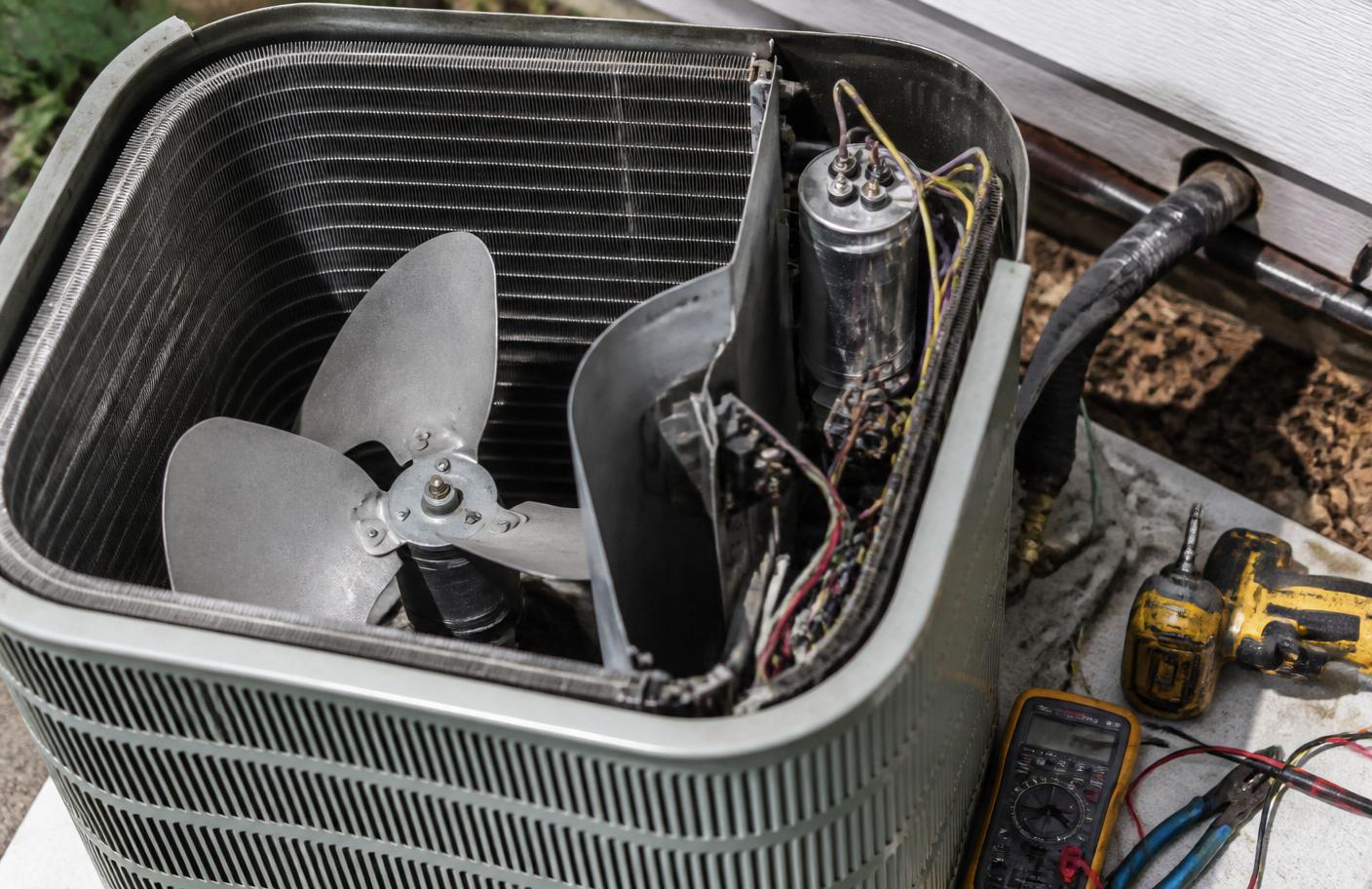
When an air conditioner in the Valley stops cooling, the cause almost always falls into one of nine categories. Some are homeowner-fixable in the time it takes to walk outside. Others require a licensed HVAC tech and gauges. Here they are in the order we actually see them on service calls.
Key takeaways
- Change the filter first — it causes more no-cool calls than anything else.
- Ice on the copper line means airflow or refrigerant problem — shut it off.
- Capacitors and refrigerant leaks are the two most common repair-tech findings in Phoenix.
- Ducts, not equipment, are behind most 'my AC can't keep up' complaints in older homes.
1. A completely clogged air filter
This is number one for a reason. A filter loaded with dust starves the evaporator coil of airflow. Low airflow drops coil temperature below freezing, ice forms on the coil, refrigerant stops absorbing heat, and the air coming out of your vents goes warm.
Pull the filter. If you cannot see light through it, replace it and let the system sit off for two hours to let any ice melt before restarting.
2. The outdoor breaker or disconnect tripped
Walk to the condenser. If the fan on top isn't spinning while the indoor blower is running, check the disconnect box on the wall next to the unit and the double-pole breaker in your main panel labeled 'AC' or 'condenser.' Reset once. If it trips a second time, stop — you have an electrical fault and you need a technician.
3. Frozen evaporator coil
If the copper line running from the outdoor unit into the house has visible ice or frost on it, the indoor coil is frozen. Common causes are the dirty filter above, low refrigerant, or a failing blower motor. Turn the thermostat to OFF and the fan to ON to melt the ice. If it re-freezes after service is restored, you have an underlying problem — call a tech.
4. Failed capacitor
The dual-run capacitor is the round or oval part that starts the compressor and fan. In Phoenix heat capacitors degrade faster than in cooler climates — 5 to 8 years is a normal Valley lifespan. Symptoms: outdoor fan not spinning but you hear a hum from the condenser, or the compressor tries to start and clicks off.
Capacitors are cheap ($20–$60 in parts) but they hold a lethal charge. This one you call for.
5. Low refrigerant (a leak)
Your AC does not consume refrigerant. If it is low, there is a leak. Symptoms: the system cools fine in the morning but falls behind by afternoon, ice on the suction line, higher-than-normal electric bills, and a hissing sound near the coil or line-set.
A licensed technician has to find the leak, repair it, and recharge to spec. Simply 'adding a pound' without finding the leak is malpractice and, on modern R-410A and R-454B systems, expensive.
6. Dirty outdoor condenser coil
After a monsoon season the outdoor coil is packed with dust, mesquite pollen and often cottonwood fluff. The coil can't reject heat, head pressure climbs, capacity drops, and the compressor gets hot.
You can gently rinse the coil from the inside out with a garden hose (power OFF at the disconnect first). If it's badly matted a chemical wash by a technician is the fix.
7. Thermostat problem
Dead batteries, a tripped C-wire, or a smart thermostat that lost its schedule. Check the display. If it is blank or showing a low-battery icon, that is your problem.
8. Undersized or leaky ductwork
If the AC has always struggled on the hottest days — not just this week — the issue is usually the ducts, not the equipment. Older Phoenix homes commonly have return ducts that are undersized by 30 to 50%. No amount of tonnage fixes a duct problem.
9. The system is at end of life
Residential HVAC in Phoenix lasts 10 to 15 years. If your unit is past 12 and needs another expensive repair, the math often favors replacement — especially with today's efficiency ratings cutting summer bills by 20 to 40%.
Frequently asked questions
Why is my AC running but not cooling in the summer?
The three most common culprits in Phoenix are a clogged filter, a failed capacitor, and low refrigerant from a leak. All three cause the system to run continuously without producing cold air.
How long can I run my AC before it needs to rest?
A properly sized system in good condition can run continuously — 24 hours a day — without damage. If yours needs to 'rest,' something is wrong.
Is it cheaper to repair or replace an AC in Arizona?
Rule of thumb: if the unit is over 10 years old and the repair is more than $1,500 — or if the repair involves the compressor — replacement usually returns the money in 3 to 5 summers of lower bills.
Related services